
Siding
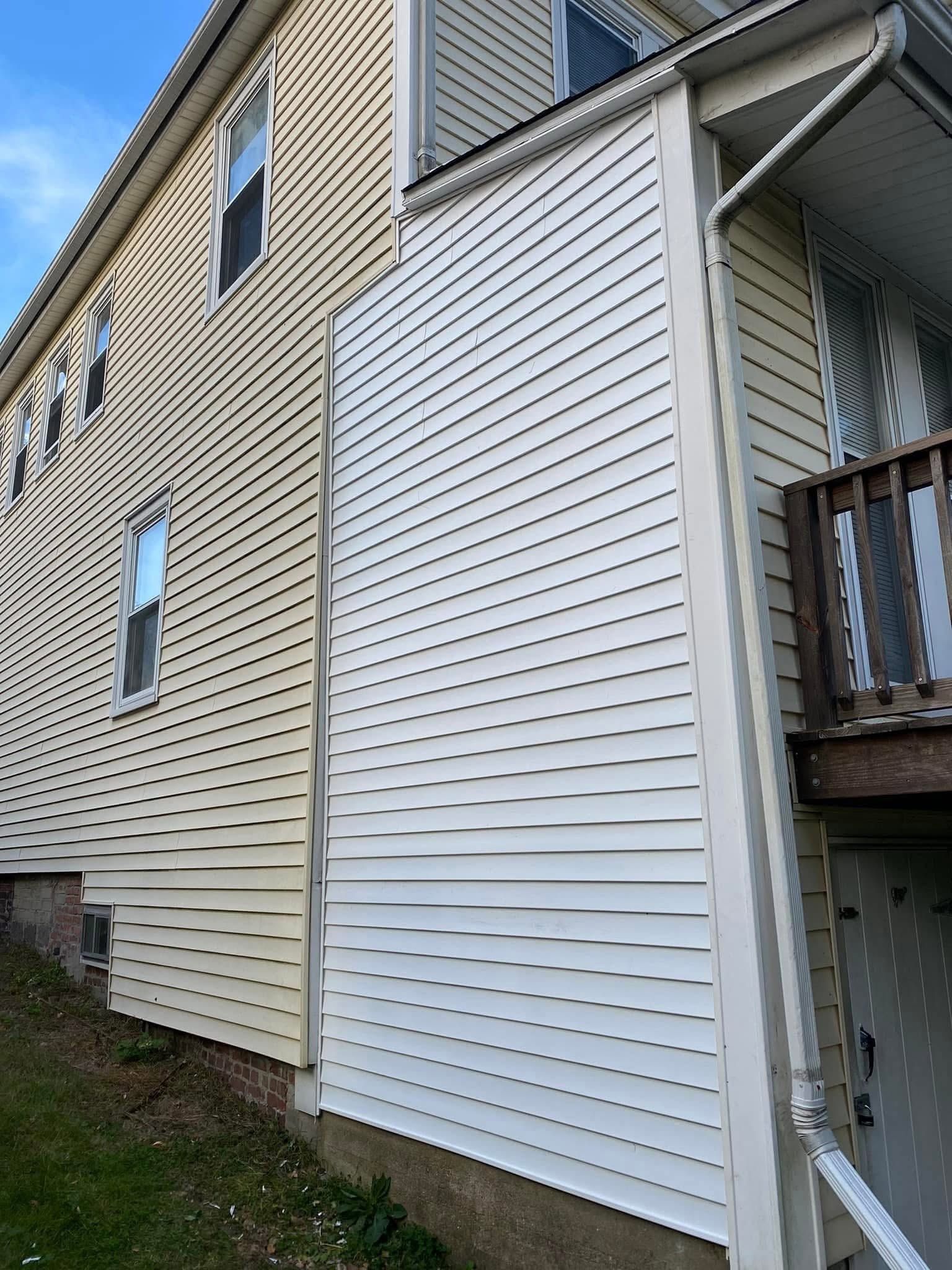
Siding in Thorndike, MA
Siding is the part of a house everyone sees and almost nobody thinks about until it starts looking rough. Paint chalks and fades. Seams open up. A section warps or cracks where a branch came down. Vinyl installed twenty-odd years ago turns a color it was never supposed to be. The house reads tired from the road, and the homeowner starts wondering what new siding would cost.
That is a reasonable place to start, and the cosmetic improvement is real — a refreshed exterior changes a property's presence more immediately than almost any other single project. But the more consequential part of the job is invisible once it is done. Siding is the outermost layer of a weather barrier, and the assembly behind it is what keeps moisture out of your sheathing, framing, and insulation. When that assembly is failing, the damage compounds quietly for years.
J and J Building and Remodeling installs and replaces siding for homeowners throughout Thorndike, Palmer, and the towns spread across this part of the valley. We handle the visible result and the layers underneath it as one job, because treating them separately is how people end up paying twice.
What We Find Behind the Old Siding
Removing existing siding is where a project becomes honest. On homes in this area, we routinely uncover the same set of conditions, and none of them are exotic — they are what decades of New England weather does to wall assemblies that were built before anyone thought hard about water management.
Sheathing softened at the base of a wall, usually where splashback or poor grading kept the lower courses damp. Housewrap lapped in the wrong direction at the seams, so it channeled water inward instead of down and out. Window and door openings with no flashing at all, or with flashing that was cut short and tucked behind rather than integrated. Rot concentrated at corners and around penetrations where two materials met and nobody detailed the transition. Previous siding installed tight against a wall with no drainage path, trapping every bit of moisture that got past it.
Homes in the village add their own wrinkles. Much of the local stock is old enough that additions have been layered on over generations, and the junctions between original structure and later work are consistently the weakest points. We also see wood siding that has been covered over rather than removed, hiding whatever condition it was in when the covering went up.
Everything we find gets addressed before new material goes on. Compromised sheathing comes out and gets replaced. Water-resistive barrier is installed and lapped correctly. Openings get properly flashed and integrated. That work is not glamorous and it does not show in a photograph, but it is the difference between siding that lasts and siding that looks fine for a while and then reveals a much larger problem.
Common Siding Questions
These come up in most conversations with homeowners considering exterior work.
How Do I Know When Siding Needs Replacing Rather Than Repair?
Isolated damage on an otherwise sound wall is often repairable, though color matching on aged material can be imperfect. Once you are seeing widespread cracking, warping, seams opening across multiple elevations, or any sign of moisture reaching the sheathing, replacement is the sounder decision. We look at the whole envelope before recommending either path.
What Siding Material Holds Up Best Here?
There is no single answer, because the right choice depends on the house, the exposure, the maintenance you are willing to do, and the budget. Vinyl, fiber cement, engineered wood, and traditional wood all have real advantages and real trade-offs in this climate. We talk through what each means for your specific property rather than pushing one product.
Will New Siding Make My House Warmer?
Siding itself contributes little thermal value, but a siding project creates the opportunity to improve things that do. Air sealing and adding exterior insulation while the walls are open are worth discussing, particularly on older homes here that leak air badly at the wall assembly.
Can Siding Be Installed Over Existing Siding?
It is sometimes done, and we generally advise against it. Covering old material means nobody inspects the sheathing or corrects the water management behind it, which defeats the main purpose of the work. Tearing off costs more upfront and tells you what you actually own.
What Season Is Best for Siding Work?
There is more flexibility than people assume, and exterior work runs through much of the year in this region. Very cold temperatures affect how some materials handle and cut, so installation methods adjust accordingly. If water is already getting into a wall, waiting is the expensive option.
Refreshing Your Home's Exterior
The right time to look at siding is before something forces the decision. A wall that is obviously failing has usually been letting water in for a while, and the repair scope grows the longer it goes unaddressed.
We will come out, examine the exterior, check the areas where problems concentrate, and give you a direct read on the condition of what you have. If the siding has good years left, we will say so. If it does not, we will explain what we expect to find underneath and how we would handle it if the sheathing turns out worse than it looks from outside. You will have the full picture before any commitment, and we will tell you promptly if demolition changes it.
Use the contact form to send your address and a description of what you are seeing on the exterior, and we will follow up to arrange a time to look at the property.
Request a Quote
We will get back to you as soon as possible.
Please try again later.